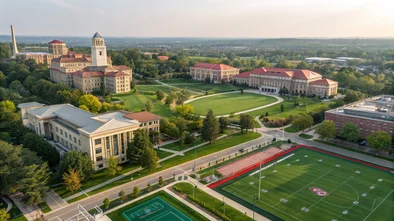
Top Universities in South Africa for 2026: UCT, Wits, UP, and More
South Africa boasts a dynamic higher education landscape, home to several world-class universities that consistently rank among the best in Africa and globally. For prospective students eyeing the 2026 intake, understanding the strengths, unique offerings, and application processes of these institutions is paramount. This comprehensive guide delves into the leading universities in the country, including the University of Cape Town (UCT), University of the Witwatersrand (Wits), Stellenbosch University (SU), University of Pretoria (UP), and the University of KwaZulu-Natal (UKZN), providing insights into their academic prowess, campus life, popular programs, and crucial tips for admission, especially concerning late enquiries. Making an informed decision is the first step towards a successful academic journey.
Understanding South African University Rankings and Reputation
University rankings offer valuable insights into an institution's global standing, research impact, teaching quality, and international outlook. In South Africa, several universities consistently feature prominently in prestigious international rankings such as the QS World University Rankings, Times Higher Education (THE) World University Rankings, and the Academic Ranking of World Universities (ARWU). While rankings should not be the sole determinant of your choice, they provide a good benchmark for academic excellence and reputation.
These rankings typically consider factors like academic reputation, employer reputation, faculty-student ratio, citations per faculty, international faculty ratio, and international student ratio. South African institutions, particularly UCT and Wits, often lead in these metrics, showcasing their commitment to high-quality education and groundbreaking research. Understanding these indicators can help you gauge the overall caliber of a university and its programs.
University of Cape Town (UCT): A Global Leader
Consistently ranked as the top university in Africa, the University of Cape Town (UCT) is renowned for its academic excellence, research output, and stunning campus at the foot of Table Mountain. Established in 1829, UCT boasts a rich history of producing influential leaders and innovative thinkers.
Strengths and Academic Prowess
UCT excels across a broad spectrum of disciplines, with particularly strong faculties in Commerce, Health Sciences, Engineering & the Built Environment, Humanities, and Law. The university is a hub for cutting-edge research, contributing significantly to global knowledge in areas such as HIV/AIDS, climate change, and poverty alleviation. Its faculty members are often leaders in their fields, attracting significant grant funding and international collaborations.
Campus Life and Environment
UCT offers a vibrant and diverse campus experience. Its main campus, located in the picturesque suburb of Rondebosch, provides state-of-the-art facilities, extensive libraries, and numerous student organizations. Cape Town itself offers an enriching backdrop with its cultural diversity, natural beauty, and bustling city life, making it an attractive destination for local and international students alike. Student life at UCT is characterized by a strong sense of community, intellectual engagement, and a wide array of sporting and cultural activities.
Popular Programs
- Health Sciences: Medicine, Nursing, Physiotherapy
- Commerce: Business Science, Accounting, Economics
- Engineering & the Built Environment: Civil, Electrical, Mechanical Engineering, Architecture
- Law: Bachelor of Laws (LLB)
- Humanities: Social Sciences, Arts, Media Studies
University of the Witwatersrand (Wits): The Heart of Innovation
Located in the economic powerhouse of Johannesburg, the University of the Witwatersrand, or Wits, is a leading research-intensive university with a rich history of academic achievement and social impact. Wits has been at the forefront of innovation and critical thought since its inception in 1896.
Academic Excellence and Research Impact
Wits is particularly strong in Sciences, Engineering, Mining, Health Sciences, and Humanities. It is home to numerous research centres and institutes that address critical societal challenges, from mining technology to public health and social justice. The university’s strong emphasis on research translates into an invigorating academic environment, where students are exposed to cutting-edge developments and encouraged to engage in critical inquiry. Many Wits alumni have gone on to achieve national and international recognition for their contributions in various fields.
Vibrant City Campus Experience
Situated in the bustling Braamfontein precinct, Wits offers a unique urban campus experience. Its diverse student body reflects the multicultural tapestry of South Africa, fostering an environment rich in cultural exchange and intellectual debate. Johannesburg provides unparalleled opportunities for internships, networking, and exposure to various industries, given its status as the economic hub of the continent. The campus is well-integrated into the city, offering students access to arts, culture, and business opportunities.
Key Study Areas
- Health Sciences: Medicine, Dentistry, Pharmacy
- Engineering and the Built Environment: Chemical, Civil, Electrical, Mechanical, Mining Engineering, Architecture
- Law: Bachelor of Laws (LLB)
- Science: Computer Science, Geology, Physics
- Humanities: Psychology, International Relations, Fine Arts
Stellenbosch University (SU): Tradition Meets Modernity
Nestled in the picturesque Winelands of the Western Cape, Stellenbosch University (SU) combines a rich heritage with a forward-thinking approach to education and research. Established in 1918, SU is renowned for its academic rigour and beautiful campus.
Renowned for Research and Innovation
Stellenbosch University is a research powerhouse, particularly strong in AgriSciences, Health Sciences, Engineering, Law, and Economic and Management Sciences. The university is known for its interdisciplinary research approach and its commitment to addressing local and global challenges through innovation. Its wine-making and viticulture programs are globally recognized, as are its contributions to biomedical research and sustainable development.
Picturesque Campus and Student Lifestyle
The university's main campus in Stellenbosch town is characterized by its historic buildings, oak-lined streets, and vibrant student community. SU offers a highly engaging student life, with a strong emphasis on sports, cultural activities, and student leadership. The surrounding Winelands provide an idyllic setting, fostering a unique and supportive environment for academic and personal growth. Students benefit from a strong sense of community and a wide range of extracurricular opportunities.
Top Study Fields
- Medicine and Health Sciences: MBChB, Dietetics, Physiotherapy
- Engineering: Industrial, Civil, Electrical, Mechatronic Engineering
- Law: Bachelor of Laws (LLB)
- AgriSciences: Viticulture and Oenology, Agricultural Economics
- Economic and Management Sciences: Actuarial Science, Financial Management
University of Pretoria (UP): A Hub of Opportunity
The University of Pretoria (UP), located in South Africa's administrative capital, is one of the largest and most comprehensive universities in the country. Established in 1908, UP has a reputation for academic excellence and innovation across a wide range of disciplines.
Diverse Offerings and Industry Links
UP is particularly distinguished by its Faculty of Veterinary Science, the only one in South Africa, which is internationally recognized. Other strong faculties include Engineering, Built Environment and Information Technology, Economic and Management Sciences, and Law. The university boasts strong ties with industry and government, providing students with valuable internship and career opportunities. Its extensive range of programs ensures that students have ample choice to pursue their academic passions.
Dynamic Campus Environment
With multiple campuses, the main Hatfield campus offers a modern and dynamic learning environment. UP is known for its state-of-the-art facilities, extensive sporting amenities, and a vibrant student culture. Its large student population creates a bustling atmosphere, offering countless opportunities for social engagement, leadership development, and participation in various clubs and societies. The university’s location in Pretoria also provides access to numerous governmental and research institutions.
Standout Programs
- Veterinary Science: BVSc (Bachelor of Veterinary Science)
- Engineering: Civil, Electrical, Mechanical, Industrial, Chemical, Mining Engineering
- Information Technology: Computer Science, Information Systems
- Law: Bachelor of Laws (LLB)
- Economic and Management Sciences: Accounting Sciences, Business Management
University of KwaZulu-Natal (UKZN): A Beacon of Diversity
Formed in 2004 through the merger of the University of Natal and the University of Durban-Westville, the University of KwaZulu-Natal (UKZN) is a comprehensive university committed to academic excellence, innovation, and social responsiveness. It reflects the rich cultural diversity of the region.
Strong Academic Programs
UKZN excels in fields such as Health Sciences, Engineering, Humanities, Agriculture, and Law. Its medical school is particularly well-regarded, playing a crucial role in addressing healthcare needs in the region. The university is a significant contributor to research, particularly in areas relevant to KwaZulu-Natal and the broader African continent, including biodiversity, public health, and social development.
Multi-Campus Experience
UKZN operates across five campuses in Durban and Pietermaritzburg, each offering a distinct atmosphere and specialised focus. This multi-campus structure provides students with a variety of learning environments and a rich tapestry of experiences. The coastal location of Durban campuses offers a relaxed lifestyle combined with urban opportunities, while Pietermaritzburg provides a more traditional university town feel.
Noteworthy Faculties
- Health Sciences: Medicine (Nelson R Mandela School of Medicine), Pharmacy, Audiology
- Engineering: Chemical, Electrical, Mechanical, Civil Engineering
- Humanities: Social Sciences, Literature, Education
- Law: Bachelor of Laws (LLB)
- Agriculture, Earth and Environmental Sciences: Agricultural Sciences, Environmental Science
Admission Requirements for 2026 Intakes: What You Need to Know
Applying to South African universities for the 2026 intake requires meticulous planning. While specific requirements vary by university and program, some general criteria apply:
- National Senior Certificate (NSC): You must possess a valid NSC or an equivalent qualification with university exemption.
- Minimum APS Score: Each university and faculty will have a minimum Admission Point Score (APS) requirement. This score is calculated based on your NSC results. Aim for the highest possible APS.
- Specific Subject Requirements: Many programs require specific subjects at certain performance levels. For instance, engineering programs typically require high marks in Mathematics and Physical Sciences, while health sciences might require Life Sciences.
- Application Deadlines: Applications for 2026 generally open between April and June 2025 and close by June-August 2025, with some highly competitive programs closing earlier. Always consult the official university websites for precise dates.
- Supporting Documents: Be prepared to submit certified copies of your ID, academic transcripts, and other relevant documents.
- National Benchmark Test (NBT): Some universities and faculties require applicants to write the NBTs. These tests assess academic literacy and quantitative literacy and may be a prerequisite for admission or used for placement purposes. Check if your chosen university and program require them and register well in advance.
It is crucial to research the specific requirements for your desired program at each university. Start preparing your application well in advance and consider applying to more than one institution to increase your chances of admission.
Navigating Late Enquiries and Applications for 2026
While early applications are always advised, circumstances sometimes lead to late enquiries for university admission. For the 2026 intake, if you find yourself in this situation, here are some actionable tips:
- Check University Websites for 'Late Application' or 'Walk-in' Information: After initial application deadlines, some universities open a brief window for late applications or 'walk-ins' if spaces become available, usually after matric results are released. This is often limited to specific programs.
- Contact Admissions Offices Directly: Email or call the admissions office of your target faculties or the general admissions department. Inquire about available spaces, alternative programs, or waiting list procedures. Be polite, concise, and have all your academic records ready.
- Consider Alternative Courses or Faculties: If your first-choice program is full, explore related fields or less competitive faculties that still align with your interests and career goals. Some universities offer bridging courses or extended programs that can lead to your desired degree in subsequent years.
- Explore Other Institutions: While the focus here is on top-tier universities, remember that there are many excellent universities of technology and comprehensive universities in South Africa that might have later application deadlines or different entry requirements.
- Prepare for a Gap Year: If all avenues for 2026 prove unsuccessful, consider taking a gap year. Use this time to improve your matric results, gain work experience, volunteer, or complete a relevant bridging course, making you a stronger applicant for the 2027 intake.
Persistence and thorough research are key when navigating late applications. Be realistic about your options and proactive in pursuing every possibility.
Choosing the Right University: Beyond the Rankings
While rankings provide an initial guide, selecting the right university is a deeply personal decision. Consider these additional factors:
- Course Content and Specialisations: Does the specific program align with your interests and career aspirations? Look into the modules offered and faculty expertise.
- Campus Culture and Environment: Do you prefer a bustling city campus or a more tranquil, traditional setting? Consider the size of the university, student body diversity, and extracurricular offerings.
- Location and Cost of Living: Factor in travel, accommodation, and general living expenses. Some cities are significantly more expensive than others.
- Student Support Services: Look for strong academic support, career guidance, counseling services, and disability support.
- Career Prospects and Alumni Network: Investigate graduate employment rates and the strength of the university's alumni network in your chosen field.
Choosing a university is one of the most significant decisions you will make for your future. South Africa's leading institutions – UCT, Wits, Stellenbosch, UP, and UKZN – offer world-class education, research opportunities, and vibrant student experiences. By thoroughly researching your options, understanding admission requirements, and applying strategically for the 2026 intake, you can confidently embark on a rewarding academic journey. Remember to consider not just rankings, but also the overall fit for your personal and academic aspirations. Good luck with your applications!