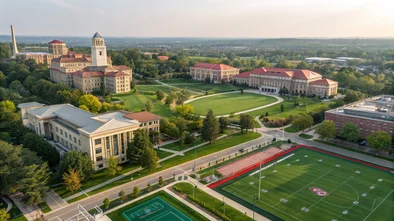
North-West University (NWU) 2027 Applications: Your Comprehensive Guide
Embarking on your university journey is an exciting, yet often daunting, prospect. For those aspiring to join the vibrant academic community of the North-West University (NWU) in 2027, thorough preparation and timely application are paramount. NWU, with its three distinct campuses in Potchefstroom, Mahikeng, and Vanderbijlpark, offers a diverse range of programmes across various faculties. This comprehensive guide is designed to equip prospective students with all the essential information needed to navigate the NWU 2027 application process successfully, covering everything from key dates and admission requirements to understanding selection courses and the crucial Admission Point Score (APS).
Key Application Dates and Process for 2027
While the official application dates for the 2027 academic year are typically finalised closer to the time, based on previous years, applications for NWU usually open in April or May of the preceding year (i.e., April/May 2026 for 2027 intake). It is crucial to mark these periods in your calendar and to regularly check the official NWU website for the most accurate and up-to-date information regarding opening and closing dates. Early application is not just a recommendation; for many competitive programmes, it's a strategic necessity.
The Online Application Portal
All NWU applications are processed online through the university's dedicated application portal. This streamlined system requires applicants to create a profile, complete a detailed application form, and upload necessary supporting documents. Ensure you have a stable internet connection and sufficient time to complete the application accurately.
- Create an Account: If you're a first-time applicant, you'll need to register and create a unique login.
- Complete the Application Form: Fill in all personal, academic, and contact details meticulously. Double-check for any errors before submitting.
- Upload Documents: Prepare certified copies of your Grade 11 final results (or Grade 12 results if available), your South African ID document or passport, and proof of application fee payment. Some courses may require additional documents like a portfolio or personal statement.
- Pay the Application Fee: A non-refundable application fee is usually required. Details on payment methods will be available on the application portal. Ensure you keep proof of payment.
Understanding NWU Admission Requirements: The APS Score
Admission to NWU, like most South African universities, is primarily based on your academic performance in your National Senior Certificate (NSC) or equivalent qualification. The primary tool for assessing this performance is the Admission Point Score (APS).
How is Your APS Score Calculated?
Your APS is calculated by assigning a point value to each of your best six subjects (excluding Life Orientation) from your Grade 12 results. Each achievement level translates to a specific number of points:
- Level 7 (80-100%): 7 points
- Level 6 (70-79%): 6 points
- Level 5 (60-69%): 5 points
- Level 4 (50-59%): 4 points
- Level 3 (40-49%): 3 points
- Level 2 (30-39%): 2 points
- Level 1 (0-29%): 1 point
It's important to note that while Life Orientation is not typically included in the APS calculation, achieving a minimum pass in it (usually Level 4 or 50%) is often a general university admission requirement. Furthermore, specific faculties and programmes will have additional subject requirements (e.g., Mathematics for Engineering, Physical Sciences for Health Sciences).
APS Score Requirements per Faculty (Illustrative Examples)
The minimum APS score required varies significantly by faculty and specific degree programme. Highly competitive degrees will naturally demand a higher APS. The figures below are illustrative based on past years and serve as a general guide. Always consult the official NWU Admission Requirements and Faculty Rule Books for the 2027 intake once they are published.
- Faculty of Health Sciences: Programmes like MBChB (Medicine) are highly selective, often requiring an APS of 38-42+ with very high percentages in core science subjects (Maths, Physical Sciences, Life Sciences). Other health-related degrees (e.g., Pharmacy, Nursing) might require an APS in the range of 30-36+, with specific subject passes.
- Faculty of Engineering: Engineering degrees (e.g., BEng in Electrical, Mechanical, Chemical) are competitive, typically requiring an APS of 32-38+, with strong performance (Level 5-7) in Mathematics and Physical Sciences.
- Faculty of Economic and Management Sciences: BCom degrees (e.g., Accounting, Economics, Business Management) generally require an APS of 28-34+, with a minimum pass in Mathematics. Some specialised BCom programmes might be higher.
- Faculty of Humanities: Programmes like BA in Communication, Psychology, or Social Sciences typically have an APS range of 26-32+. Specific language or history requirements may apply for certain majors.
- Faculty of Education: BEd degrees require an APS of 26-32+, with specific subject requirements depending on the teaching specialisation (e.g., Mathematics for Maths teachers).
- Faculty of Law: LLB degrees are highly sought after, with APS requirements often in the 30-36+ range. Strong English and a good overall academic record are crucial.
- Faculty of Natural and Agricultural Sciences: BSc programmes can range from 28-36+, depending on the specialisation (e.g., Biotechnology, Computer Science, Environmental Sciences), with strong emphasis on Mathematics and Physical/Life Sciences.
It is paramount to verify the exact APS and subject-specific requirements for your desired programme on the NWU official website or in their latest prospectus as soon as it becomes available. Meeting the minimum APS does not guarantee admission, especially for selection courses.
Selection Courses vs. Non-Selection Courses
Understanding the distinction between selection and non-selection courses is vital for prospective NWU students, as it significantly impacts the application strategy and chances of admission.
Selection Courses: High Demand, Limited Space
Selection courses are those programmes where the number of qualified applicants far exceeds the available spaces. These programmes are highly competitive and involve a multi-faceted selection process beyond merely meeting the minimum APS score. Admission to these courses is not guaranteed even if you meet all minimum requirements.
Characteristics of Selection Courses:
- Higher APS Requirements: Generally demand a significantly higher APS than non-selection courses.
- Additional Criteria: May require additional assessments such as interviews, portfolios, practical tests, or the National Benchmark Test (NBT) with specific proficiency levels.
- Strict Deadlines: Often have earlier application closing dates than other programmes.
- Examples at NWU: MBChB (Medicine), Pharmacy, Dietetics, Physiotherapy, Occupational Therapy, certain Engineering disciplines, and sometimes LLB (Law) depending on the volume of applications.
Tips for Applying to Selection Courses:
- Excel Academically: Aim for the highest possible marks, especially in core subjects relevant to your chosen field.
- Prepare Thoroughly: If an NBT, interview, or portfolio is required, dedicate significant time to preparation. Seek guidance if needed.
- Apply Early: Submit your application as soon as the portal opens to ensure your application is reviewed promptly.
- Have a Backup Plan: Due to their competitive nature, it's wise to apply to at least one alternative, less competitive programme or institution.
Non-Selection Courses: Meeting the Minimums
Non-selection courses are programmes where admission is primarily based on meeting the published minimum academic requirements, including the APS score and specific subject passes. While still competitive, they typically have more available spaces and do not involve the same extensive secondary selection processes as selection courses.
Examples at NWU: Many Bachelor of Arts (BA), Bachelor of Commerce (BCom - general), and Bachelor of Education (BEd - general) degrees, as long as you meet the specific programme requirements.
Tips for Applying to Non-Selection Courses:
- Verify Requirements: Double-check all minimum APS and subject requirements.
- Submit Accurately: Ensure your application is complete and all supporting documents are correctly uploaded.
The North-West University Admission Test (NBT)
The National Benchmark Test (NBT) is a crucial component for admission to many South African universities, including certain programmes at NWU. The NBT assesses academic readiness for university study and is often compulsory for specific faculties, particularly those with selection courses, or for programmes where additional assessment beyond matric results is deemed necessary.
What is the NBT?
The NBT comprises two components:
- Academic Literacy (AL): Assesses your ability to understand and use academic language in various contexts.
- Quantitative Literacy (QL): Evaluates your ability to apply mathematical concepts and reason with quantitative information.
For some science-based programmes (e.g., Engineering, Health Sciences), a third component, Mathematics (MAT), may also be required, which assesses higher-level mathematical skills.
The NBT results are used to determine your readiness for university-level work and can sometimes influence placement into foundation or extended programmes if your results indicate a need for additional academic support.
Who Needs to Write the NBT for NWU 2027?
It is essential to check the specific requirements for your chosen programme on the NWU website. Generally, the NBT is compulsory for applicants to programmes in faculties such as Health Sciences, Engineering, Education, and certain programmes within Natural and Agricultural Sciences or Economic and Management Sciences. Even if not explicitly stated, writing the NBT can sometimes strengthen your application, especially for competitive fields.
When and Where to Write?
NBTs are typically written throughout the year. It is highly recommended to write your NBTs early in your Grade 12 year, ideally before the application closing dates for competitive programmes. This ensures your results are available in time for your application. You can register and find test dates and venues on the National Benchmark Test Project (NBTP) website.
Preparation Tips for the NBT:
- Understand the Format: Familiarise yourself with the test structure and types of questions.
- Practice: Utilise available practice materials and past papers. Focus on improving your academic reading, critical thinking, and mathematical reasoning skills.
- Time Management: Practice answering questions within a time limit, as the NBT is a timed assessment.
Important Tips for a Successful NWU 2027 Application
- Start Early: Don't wait until the last minute. The earlier you apply, especially for selection courses, the better your chances.
- Read the Prospectus: Carefully read the NWU general prospectus and the specific faculty rule books for the 2027 academic year once released. These documents contain detailed and official requirements.
- Gather All Documents: Have certified copies of your ID, academic transcripts (Grade 11 final, Grade 12 mid-year/preliminary), and proof of application fee payment ready before starting the online application.
- Check Application Status: Regularly log in to the NWU application portal to track the status of your application. Respond promptly to any requests for additional information.
- Backup Plans: Given the competitive nature of university admissions, always have alternative study options or institutions in mind.
- Seek Assistance: If you encounter any difficulties or have questions, do not hesitate to contact the NWU admissions office or student advisors for clarification. Their contact details are available on the official website.
- Consider Campus Choice: While all NWU campuses offer quality education, they each have a unique atmosphere and focus. Research Potchefstroom, Mahikeng, and Vanderbijlpark to see which best aligns with your academic and personal preferences.
NWU Campuses: Potchefstroom, Mahikeng, and Vanderbijlpark
The North-West University operates across three distinct campuses, each offering a unique academic and social environment:
- Potchefstroom Campus: Often considered the largest and most traditional, known for its strong emphasis on research, a wide range of academic programmes, and a vibrant student life with numerous residences and sports facilities.
- Mahikeng Campus: Located in the capital city of North West Province, this campus has a rich history and a strong focus on community engagement, offering a diverse array of programmes particularly in humanities, education, and some sciences.
- Vanderbijlpark Campus: Situated along the Vaal River, this campus provides a dynamic learning environment with a modern infrastructure. It's known for its business-related programmes, engineering technology, and a focus on practical, career-oriented education.
When applying, consider which campus aligns best with your chosen field of study and personal preferences. Some programmes are only offered at specific campuses.
Conclusion
Applying to North-West University for the 2027 academic year requires diligence, strategic planning, and a thorough understanding of the admission process. By familiarising yourself with the application dates, APS requirements, the distinction between selection and non-selection courses, and the role of the NBT, you can significantly enhance your chances of securing a spot at this esteemed institution. Start your preparation today, stay informed by regularly checking the official NWU website, and approach your application with confidence and meticulous attention to detail. Your future at NWU awaits!