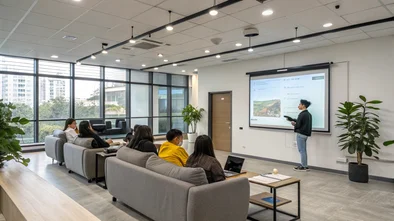
Shaping Future Educators: Humanities Teaching Programmes at TUT for 2027
The Tshwane University of Technology (TUT) stands as a beacon of academic excellence and vocational relevance, consistently producing graduates who are not only well-versed in theory but also adept in practical application. For aspiring educators looking to make a profound impact on the future generation, TUT's Faculty of Humanities offers a comprehensive suite of teaching programmes, specifically for the 2027 intake, designed to cultivate highly skilled and compassionate teachers. These programmes are meticulously crafted to meet the evolving demands of the education sector, preparing students to navigate the complexities of modern classrooms and inspire young minds. Choosing a BEd in Humanities at TUT is an investment in a rewarding career, equipping you with the pedagogical tools and subject-specific knowledge to excel in various educational settings. This article delves into the diverse Bachelor of Education options available, outlines the essential admission requirements, explores pathways for advanced studies, and highlights the extensive career opportunities awaiting TUT graduates.
Understanding TUT's Bachelor of Education Offerings
TUT's Faculty of Humanities is committed to nurturing educators who are equipped to teach across various phases of schooling. The Bachelor of Education (BEd) degree is structured to provide a holistic understanding of child development, curriculum design, classroom management, and innovative teaching methodologies. Whether your passion lies in laying foundational knowledge or guiding adolescents through complex subjects, TUT has a programme tailored for you.
Foundation Phase Education (Grade R-3)
This programme focuses on the crucial early years of schooling, where the building blocks of literacy, numeracy, and life skills are established. Graduates will be prepared to teach all subjects in Grades R to 3, fostering a love for learning and developing essential cognitive and social skills in young children. The curriculum emphasizes play-based learning, creative teaching strategies, and an understanding of early childhood psychology.
Intermediate Phase Education (Grade 4-6)
The Intermediate Phase bridges the gap between foundational learning and more specialized subject teaching. Students in this programme will be trained to teach a broader range of subjects including Home Language, First Additional Language, Mathematics, Natural Sciences and Technology, and Social Sciences. The focus is on developing critical thinking, problem-solving skills, and fostering independent learning in pre-adolescent learners.
Senior Phase (Grade 7-9) and Further Education and Training (FET) Phase (Grade 10-12) Education
For those passionate about specific academic disciplines, the Senior and FET Phase BEd programmes offer specialization in two distinct teaching subjects. This allows for in-depth knowledge and advanced pedagogical approaches within chosen fields, preparing educators to teach at a higher level and inspire students towards academic excellence and future career paths. This is where the Humanities specializations truly shine.
Specialised Teaching Disciplines within Humanities
TUT offers a rich array of specializations under the Humanities umbrella, catering to diverse interests and skills. These programmes ensure that future educators are not only proficient in their chosen subjects but also understand their role in holistic learner development. Some key specialisations include:
- Agriculture Education: This unique specialization combines agricultural sciences with pedagogical expertise, preparing teachers to impart knowledge on sustainable farming practices, food security, and agricultural economics to high school learners.
- Consumer Sciences Education: Equips educators to teach subjects related to home economics, nutrition, consumer rights, textile studies, and hospitality. This is vital for equipping learners with practical life skills.
- Economic and Management Sciences (EMS): Covers subjects like Accounting, Business Studies, and Economics. Graduates will foster financial literacy and entrepreneurial skills among students, preparing them for the economic landscape.
- Languages: Specializations in English, Afrikaans, and various indigenous languages (e.g., isiZulu, Sepedi, Setswana) prepare teachers to develop strong communication and literary appreciation skills in learners.
- Social Sciences: Encompasses History, Geography, and Religious Studies. Educators will teach students to understand human societies, cultures, historical events, and the physical world.
- Life Orientation: Focuses on personal, social, intellectual, emotional, and physical well-being. Teachers in this field guide learners through critical developmental stages, promoting healthy lifestyles and responsible citizenship.
- Creative Arts: Specializations in Visual Arts, Music, Dance, and Drama allow educators to foster creativity, self-expression, and cultural appreciation in learners.
- Technology Education: For those interested in teaching design, computing, and other technology-related subjects, blending practical skills with problem-solving.
Each specialization is designed to ensure a deep understanding of the subject matter coupled with effective pedagogical strategies, making TUT graduates highly sought after in schools across the country.
Admission Requirements for 2027 Intake
Gaining admission into TUT's competitive BEd programmes requires careful preparation and meeting specific academic criteria. Prospective students for the 2027 academic year should pay close attention to the following:
- National Senior Certificate (NSC) or Equivalent: A valid NSC or an equivalent qualification is the fundamental requirement.
- Home Language Proficiency: A minimum of Level 5 (60-69%) in your chosen Home Language is crucial. Strong language skills are paramount for effective communication and instruction.
- Mathematics or Mathematical Literacy: Depending on the specific BEd programme and chosen teaching subjects, applicants will generally require at least a Level 3 (40-49%) in Mathematics or a Level 4 (50-59%) or Level 5 (60-69%) in Mathematical Literacy. Some specializations may demand higher levels in Mathematics.
- Admission Point Score (APS): Applicants typically need an APS of 24 to 25 for most BEd programmes. However, highly sought-after specializations may require a higher APS. It is always advisable to check the specific programme requirements on the TUT website.
- Subject-Specific Requirements: For Senior and FET Phase specializations, specific performance levels in the relevant subjects (e.g., History, Geography, Business Studies) at NSC level will be required.
- National Benchmark Tests (NBTs): While not always a primary admission criterion, satisfactory performance in NBTs can strengthen an application, particularly for competitive programmes.
Prospective students are strongly encouraged to visit the official TUT website or consult the latest prospectus for the most up-to-date and detailed admission criteria for their chosen BEd programme.
Pathways to Advanced Studies and Specialization
A BEd degree from TUT is not merely a terminal qualification; it serves as a robust foundation for continuous professional development and academic advancement. The university encourages its graduates to pursue further studies, allowing them to specialize, deepen their expertise, and contribute to educational research and policy.
- Master of Education (MEd): After completing a BEd, graduates can enroll in various MEd programmes. These typically allow specialization in areas such as Educational Leadership and Management, Curriculum Development, Inclusive Education, Educational Psychology, Higher Education Studies, or specific subject didactics. An MEd enhances career prospects and can lead to leadership roles within educational institutions.
- Doctor of Education (DEd) / PhD in Education: For those passionate about contributing to the theoretical and research aspects of education, a doctoral degree offers the opportunity to conduct original research, generate new knowledge, and become a leading expert in a chosen field. This qualification opens doors to academia, advanced research, and policy advisory roles.
These postgraduate pathways are crucial for educators who aspire to shape the future of education beyond the classroom, influencing policy, curriculum, and leadership.
Career Opportunities for TUT Education Graduates
The demand for qualified and dedicated educators remains consistently high, both locally and internationally. A BEd from TUT, particularly with a Humanities specialization, opens up a wide array of fulfilling career opportunities:
- Classroom Educator/Teacher: The most direct path, teaching in public or private schools across Foundation, Intermediate, Senior, or FET phases, specializing in your chosen subjects.
- Subject Head/Departmental Head: With experience and further qualifications, educators can advance to leadership roles within schools, managing specific learning areas or departments.
- School Counsellor: Providing academic, personal, and career guidance to students, often requiring additional training in counselling.
- Educational Inspector/Subject Advisor: Working for provincial or national education departments, ensuring quality education delivery and supporting teachers.
- Curriculum Developer: Designing and reviewing educational materials, textbooks, and learning programmes for various organizations.
- Education Researcher: Conducting studies to improve teaching practices, educational policies, and learning outcomes, particularly with postgraduate degrees.
- Lecturer/Academic: For those with MEd or DEd qualifications, opportunities arise to teach and conduct research at universities and colleges.
- Training and Development Specialist: Applying pedagogical skills in corporate settings, developing and delivering training programmes.
- NGO/NPO Roles: Working with non-governmental or non-profit organizations focused on educational development, community outreach, and social upliftment.
The skills acquired through a BEd – communication, critical thinking, problem-solving, leadership, and empathy – are highly transferable and valuable across numerous sectors, making education graduates versatile professionals.
Why Choose TUT for Humanities Education?
Tshwane University of Technology stands out as an exceptional choice for aspiring educators for several compelling reasons:
- Practical, Applied Learning: TUT prides itself on its 'work-integrated learning' approach, ensuring students gain hands-on experience through extensive practical teaching placements in schools.
- Experienced and Dedicated Faculty: Learn from seasoned academics and educators who bring a wealth of practical experience and research insights into the classroom.
- Comprehensive Curriculum: Programmes are regularly updated to align with national curriculum statements and international best practices, ensuring graduates are relevant and competitive.
- Supportive Learning Environment: TUT offers a robust support system, including academic advising, counselling services, and access to modern libraries and technology-enhanced learning spaces.
- Commitment to Social Impact: TUT fosters a strong sense of social responsibility, encouraging educators to become agents of change within their communities.
- Diverse Specializations: The wide range of Humanities specializations allows students to truly follow their passion and become experts in their chosen field.
Conclusion
Embarking on a Bachelor of Education journey at the Tshwane University of Technology for the 2027 intake is a decision that promises a fulfilling and impactful career. The Faculty of Humanities offers meticulously designed programmes that go beyond theoretical knowledge, instilling practical skills, critical thinking, and a profound sense of purpose. With diverse specializations from Agriculture and Consumer Sciences to Languages and Social Sciences, a strong emphasis on practical experience, and clear pathways for advanced studies, TUT prepares you to become a dynamic and influential educator. Whether you dream of shaping young minds in the Foundation Phase or inspiring critical thought in the FET Phase, TUT provides the ideal environment to realize your aspirations. Seize this opportunity to join a legacy of excellence and contribute meaningfully to the education landscape of South Africa and beyond. Your journey to becoming an exceptional educator starts here.